


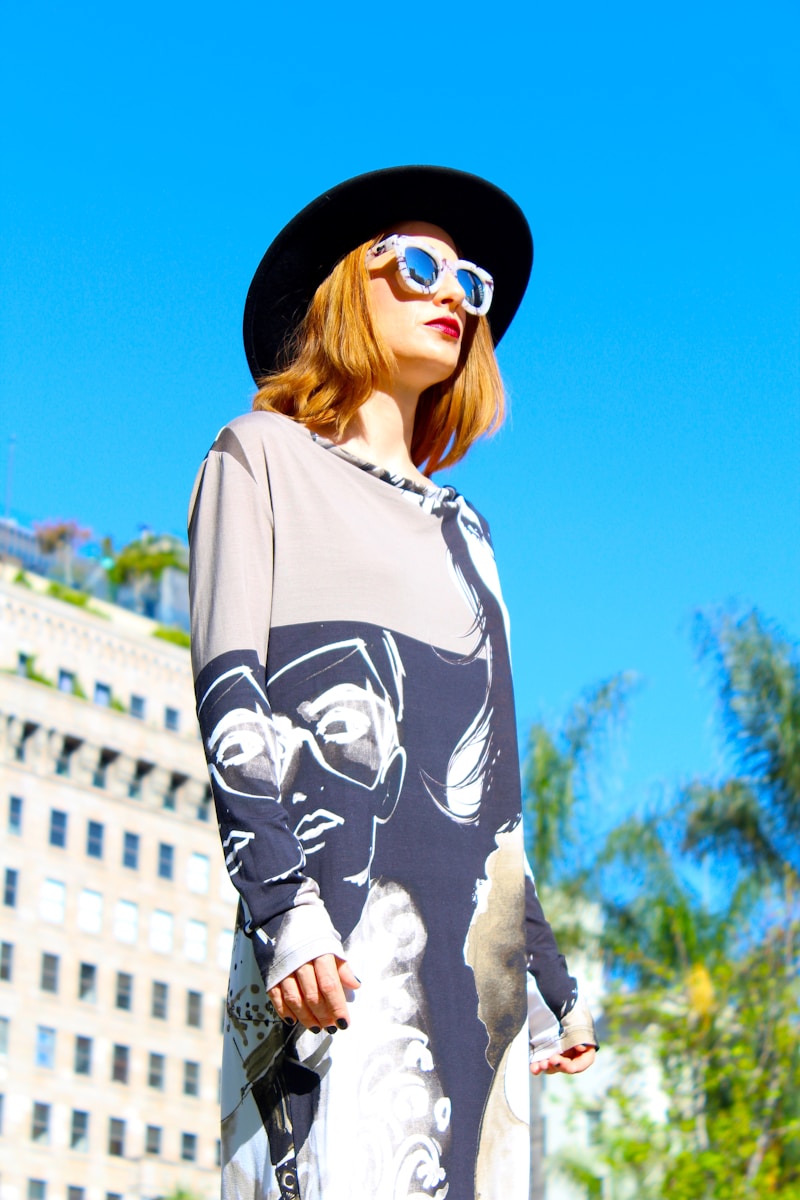
Fashion is more than clothing; it is a mirror of human psychology. Every choice, from muted neutrals to flamboyant prints, tells a story about the wearer’s emotions, aspirations, and sense of self. Among all stylistic choices, bold prints stand out as one of the most intriguing. They can spark joy, demand attention, or even communicate rebellion. But why do people gravitate toward loud patterns at some times and avoid them at others? And what does it say about society when bold prints dominate the runways or the streets?
The psychology of bold prints in fashion reveals the interplay between individuality, culture, and perception. To understand it, one must look at the human desire for self-expression, the symbolic meanings of patterns and colors, and the way social contexts shape what feels acceptable or daring. Bold prints are not just design choices; they are psychological statements.
Patterns as Language
Since ancient times, patterns have been used as a form of nonverbal communication. Tribal prints, animal motifs, or geometric designs were more than decoration; they carried cultural, spiritual, and social meanings. In this sense, bold prints have always been a language of identity and belonging.
In modern fashion, this tradition continues, though in subtler forms. A leopard print coat still signals wildness and untamed confidence, while polka dots often evoke playfulness and charm. Bold florals suggest optimism, while geometric prints can signal intellect or avant-garde leanings. People may not consciously decode these signals, but they register them instinctively, shaping how others are perceived.
Psychologists describe this as “enclothed cognition”—the idea that clothing influences not only how others see us but also how we see ourselves. Wearing a bold print can alter mood and behavior, boosting confidence by aligning outward appearance with an inner desire for visibility and expression.
The Allure of Attention
One of the clearest psychological explanations for bold prints lies in the desire for attention. Human beings are social creatures, and visibility often translates to influence. Bold prints, with their vibrant colors and striking patterns, naturally draw the eye.
This is why such prints are often linked with extroversion. Extroverts tend to seek stimulation and thrive in social settings, and bold clothing amplifies their presence. Yet even introverts sometimes gravitate toward bold prints, not to demand attention but to experiment with identity. A shy individual might wear a patterned dress as a way of “trying on” confidence, using fashion as a tool for self-transformation.
Interestingly, context matters. A bright tropical print shirt may feel appropriate at a beach gathering but overwhelming in a boardroom. The wearer’s psychology adapts to these contexts: some relish the disruption, while others reserve bold prints for moments when they feel safe to experiment.
Rebellion and Nonconformity
Bold prints often carry undertones of rebellion. In the 1960s and 70s, psychedelic patterns became symbols of counterculture, rejecting the muted conformity of postwar fashion. Similarly, punk aesthetics embraced graphic prints and clashing patterns as acts of defiance against societal norms.
This rebellious streak persists today. Streetwear brands frequently employ oversized logos, graffiti-inspired graphics, or distorted prints to push back against mainstream ideas of polish and restraint. By donning such prints, wearers align themselves with a spirit of independence.
The psychology here is tied to identity formation. To wear something bold in a society that favors subtlety is to declare: “I will not blend in.” It is a visual assertion of autonomy, whether playful or confrontational.
Color and Emotion in Bold Prints
Color psychology plays an enormous role in how bold prints are perceived. Bright reds stimulate energy and passion, blues communicate calm confidence, and yellows evoke joy. When these colors are arranged in bold patterns, their effects are intensified.
Consider animal prints. A zebra or cheetah pattern is not simply about stripes or spots; it taps into primal associations with the wild. Similarly, tropical prints with lush greens and vibrant flowers evoke vitality and escapism. Plaid patterns, depending on their palette, can shift between rebellious punk energy and polished tradition.
The impact is not just external but internal. Studies show that wearing brighter, bolder clothing can elevate mood and enhance self-esteem. Thus, bold prints are not merely decorative—they function as psychological tools for shaping emotion.
Gender and Boldness
Bold prints also reflect shifting ideas about gender expression. Traditionally, men’s fashion was restrained, relying on solid colors or subtle stripes, while women’s clothing embraced more decorative motifs. But in recent decades, gender lines in fashion have blurred.
Designers increasingly experiment with florals in menswear, geometric suits for women, and unisex collections where bold prints are central. This democratization reflects cultural movements toward inclusivity and freedom of self-expression. The psychology here lies in liberation: to wear a bold print, regardless of gender, is to reject the idea that visibility or flamboyance is limited to one identity.
The Influence of Culture and Geography
Cultural context strongly influences how bold prints are interpreted. In some societies, vibrant patterns are the norm rather than the exception. African wax prints, Indian saris, and Japanese kimonos have long embraced color and boldness as part of cultural heritage. In such contexts, prints carry deep symbolic meanings, from fertility to prosperity to protection.
In contrast, Western minimalism often favored muted palettes, associating restraint with sophistication. The cyclical return of bold prints in Western fashion—through the 1960s psychedelic wave, 1980s power dressing, or the recent Y2K revival—reflects a pendulum swing between conformity and exuberance.
Globalization has blurred these boundaries. Today, prints travel fluidly across borders, gaining new meanings in new contexts. A paisley motif might be read as bohemian in Europe but as heritage in South Asia. The psychology of bold prints, then, is deeply tied to cultural translation.
Workplace Psychology: Power and Risk
Bold prints in professional settings carry unique psychological weight. Traditional office attire often values discretion—solids, muted colors, conservative cuts. Choosing a bold print in such an environment can be seen as both risky and empowering.
For women, a boldly patterned dress or blouse might challenge the expectation that professionalism equals invisibility. For men, a patterned tie or shirt might serve as a subtle rebellion against uniformity. In both cases, bold prints become tools for reclaiming individuality in spaces that often demand conformity.
The risk, of course, is misinterpretation. A pattern too loud might be seen as unprofessional, particularly in conservative industries. Thus, the psychology of wearing bold prints at work involves a careful negotiation between self-expression and perceived credibility.
Social Media and the Amplification of Boldness
In the digital era, bold prints have found a natural home on social media. Instagram feeds, TikTok videos, and fashion blogs thrive on visuals that capture attention quickly. A striking print photographs well, making it an ideal tool for building online presence.
This amplification affects psychology in two ways. First, individuals may feel emboldened to wear prints they once avoided, knowing they will be celebrated in digital communities. Second, the saturation of bold imagery online normalizes these choices, gradually shifting what society deems stylish or acceptable.
Thus, bold prints are no longer confined to subcultures or daring individuals; they are increasingly mainstream, aided by the visibility and validation of digital platforms.
The Personal Psychology of Bold Prints
Beyond societal influences, the decision to wear bold prints is often deeply personal. For some, it is about nostalgia—wearing patterns reminiscent of childhood or cultural roots. For others, it is about aspiration—signaling creativity, openness, or confidence they hope to cultivate.
There is also a therapeutic element. On days when spirits are low, donning a colorful, patterned garment can act as a mood-lifter. Psychologists describe this as “dopamine dressing,” where bold fashion choices stimulate joy through visual and emotional cues.
In this sense, bold prints are not just fashion—they are a form of self-care. They remind the wearer, and those around them, that life can be playful, expressive, and vibrant even amidst daily challenges.